

Longmoor Burlington Neighbourhood Guide: Homes, Schools, Parks, Prices & Living Here

Longmoor Burlington Neighbourhood Guide: Homes, Schools, Parks, Prices & Living Here
By Roshan Basnet, Real Estate Broker, REAL Broker Ontario Ltd.
Neighbourhood guide prepared October 2026. Market snapshot: January - June 2026.
If you’re thinking about moving to Burlington and want a mature South Burlington neighbourhood with established trees, usable backyards, schools, recreation and access to the GO Train, Longmoor deserves a serious look.
I may be a little biased. I don’t just sell homes in Longmoor. I live here.
I walk these streets, talk to the neighbours and watch the neighbourhood change. I’ve also taken an older Longmoor home and transformed it into the modern farmhouse my family lives in today. That gives me a perspective you won’t get by looking only at listing photos or an average sale price.
Longmoor’s appeal is the combination: mature land, a convenient location, parks woven into everyday life and homes that offer very different possibilities depending on the street, lot and layout.
You can find a renovated bungalow, a split-level with room to improve, a townhouse or a newer two-storey. You can also find two homes at similar prices that would give you completely different lifestyles.
That’s what this guide is about: understanding Longmoor well enough to decide whether it fits you—and which part of it deserves your attention.
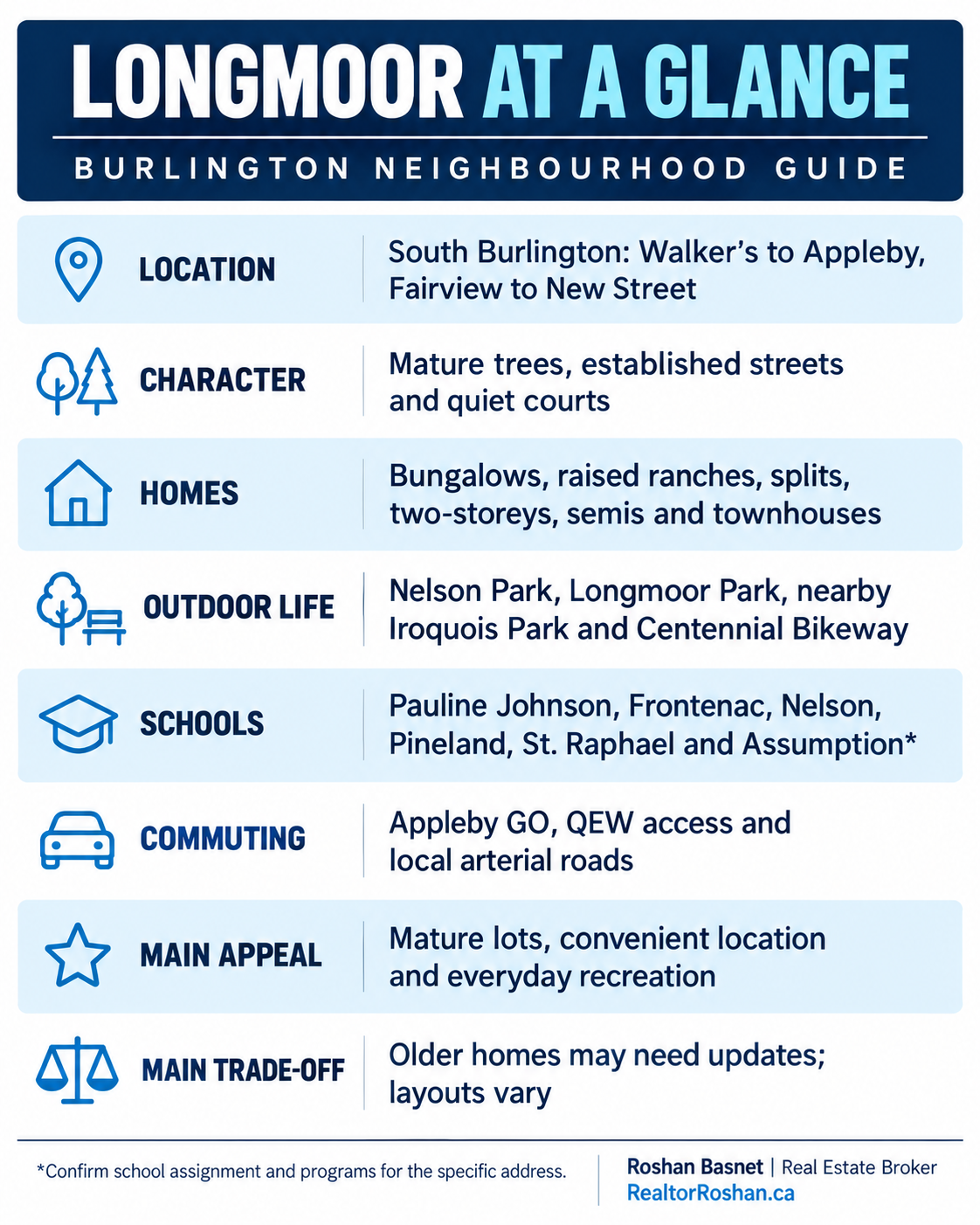
Looking for a property here? Ask me for the homes currently available in Longmoor and a shortlist based on the layout, lot, school requirements and budget that matter to you.
Where is Longmoor in Burlington?
Longmoor sits in South Burlington, south of the QEW. For a practical first orientation, picture the area between Walker’s Line and Appleby Line, with Fairview Street above and New Street below.
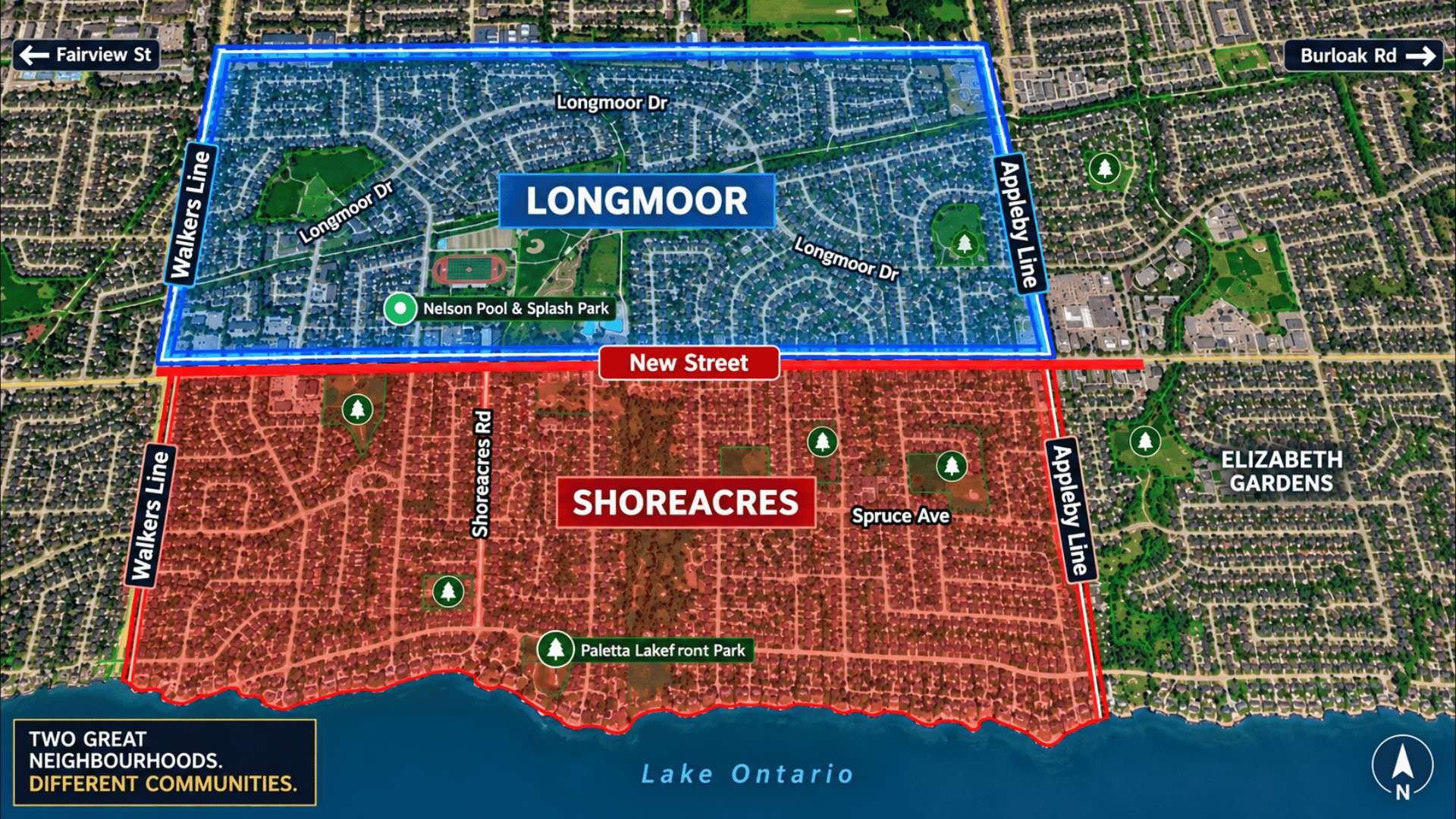
Cross New Street toward the lake and you enter Shoreacres. Longmoor gives you access to that broader South Burlington lifestyle while having its own housing mix and neighbourhood feel.
Longmoor Drive winds through the area, with smaller streets and courts branching from it. That layout matters. A house can be close to an arterial road on the map while feeling tucked away once you’re standing on its street.
Real estate search boundaries, informal neighbourhood descriptions and school catchments do not always match exactly. When we’re looking at a specific home, I check the address rather than relying on the neighbourhood label in a listing.
Appleby GO is nearby along the Fairview corridor. Head south and you reach Lake Ontario and South Burlington’s waterfront destinations. Head west and you have downtown Burlington. Shopping and services sit around the neighbourhood’s edges, so residential streets can feel removed from commercial activity without being far from it.
To understand the entrances, paths and individual pockets, read my companion guide, Longmoor Map Explained.
What living in Longmoor actually feels like
The first thing you notice is that Longmoor has had time to grow into itself.
The trees are established. Gardens have been cared for over decades. Houses have been extended, updated and adapted by different generations of owners. Much of the neighbourhood’s older housing dates to the 1960s and 1970s, and that history is visible in the streetscape.
Some homes retain their original character. Others have been renovated so extensively that you might not immediately recognize the house they started as. That variety is part of what makes shopping here interesting.
The courts are part of the appeal
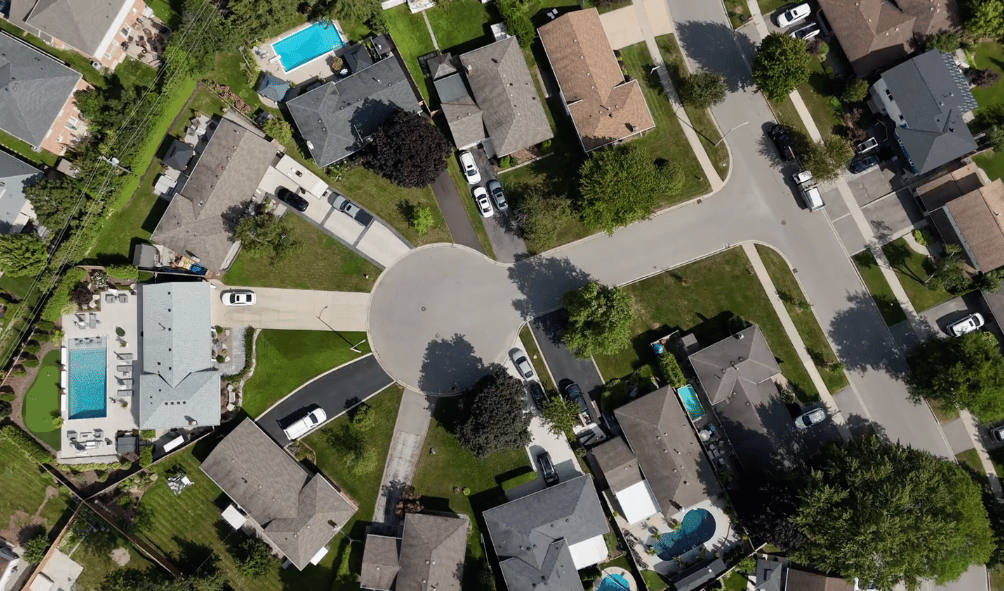
One feature I keep coming back to is the number of courts scattered through Longmoor. In my neighbourhood walkthrough, I highlight more than 20.
A court can change how a street feels. There is generally less reason for someone to drive through it unless they live there or are visiting. You’ll see basketball nets, hockey nets and neighbours chatting outside.
For buyers, though, the word “court” is only the beginning. Where does the house sit? How does the lot widen? Where do visitors park? Does the driveway work for your vehicles? Is the backyard private, or do several neighbouring yards look into it?
A court location can be attractive for different reasons. One may offer a particularly usable backyard. Another may feel quieter. A third may have an unusual shape that takes some thought to landscape well. I want buyers to understand those differences before assigning a premium to the address.
A neighbourhood going through a gradual transition
Some Longmoor homes have been owned by the same people for decades. As those owners move, I’m seeing younger families arrive, renovate and make the neighbourhood their own.
That is my observation as a resident, rather than a demographic forecast. I notice it in ordinary ways: strollers, children learning to ride bikes, families using the parks and houses getting a fresh start.
An established neighbourhood doesn’t have to feel static. Longmoor has a familiar streetscape, but the people and homes continue to change.
Parks and recreation: one of Longmoor’s biggest strengths
When people ask me why I like Longmoor for an active household, I often start with the parks.
Recreation here can become part of an ordinary week. A walk, a swim, a bike ride or time at the field doesn’t always require a separate outing across the city. How convenient that feels will depend on where you buy and which facilities you use.
Nelson Park and the surrounding recreation area

Nelson is a major part of the neighbourhood’s recreation story. The broader park and recreation area brings together playing fields, arena access, an outdoor pool, tennis and cycling connections. The City also identifies a BMX track at Nelson Park.
For someone who uses these amenities regularly, living nearby can make a real difference. Think about the practical benefit of being close to the activities that already fill your calendar.
Nelson Pool is an outdoor seasonal facility, so check the City’s current swimming schedule rather than assuming year-round availability. Arena programs, field use and other activities also depend on schedules, registration and conditions.
Nearby tennis is another feature I point out in my walkthrough. If tennis is part of your routine, investigate Appleby Tennis Club’s current membership options and access arrangements. I would assess those directly rather than build a buying decision around an old membership price.
Longmoor Park and nearby Iroquois Park
Longmoor Park adds another place to get outside within the residential area. Nearby Iroquois Park is also part of the local outdoor recreation picture, particularly for households using its fields.
The question I ask buyers is simple: Which of these places would you actually use?
A park beside a listing is valuable in a different way when you walk your dog there every morning or your child practices nearby several times a week. Map the places that matter to your household, then compare the routes from each property.
Park proximity has trade-offs
I like park access, but I still look at what sits directly behind a home.

An open field, a busy sports area, a path and a landscaped edge create different experiences. Visit while the park is being used. Notice activity, parking, sightlines and lighting. A buyer who enjoys being beside recreation may love that setting; someone seeking a secluded backyard may prefer another street.
The Centennial Bikeway: useful in everyday life
The Centennial Bikeway is one of Longmoor’s most useful features. It gives residents a walking and cycling connection through the area and into Burlington’s wider trail network.
I see people using it for dog walks, runs, bike rides and getting around locally. Parents teach children to ride. People head out for a quick walk after dinner. For many residents, it becomes a regular route.
This is why “close to the bike path” deserves more attention than it sometimes gets in a listing description.
Consider the difference between living near a trail in theory and having a convenient entrance close to your street. A route you can easily reach is a route you’re more likely to use.
For buyers who want an active lifestyle, I suggest walking the actual connection from the house. Check road crossings, visibility and the distance to the destinations you have in mind. If the home backs directly onto the path, spend time in the backyard and assess privacy as well as convenience.
I also like seeing how a location works at different times. A quiet weekday visit and a sunny weekend morning can show you different sides of the same path.
Winter in Longmoor: the local hill and outdoor life
Longmoor has details that don’t appear in a property’s feature sheet.

One is the hill some locals call “Murder Mountain.” That’s a local nickname, not the name to search for in an official park directory. The City identifies a designated tobogganing hill on the east side of Nelson Park, north of the Centennial bike path.
After a good snowfall, that part of the park becomes a gathering place. In my video, I show the winter scene because it says something about living here that a summer listing photo can’t convey.
I’ve also filmed community outdoor skating in the area. Seasonal neighbourhood rinks depend on weather and the arrangements in place that winter, so check current availability before planning around them.
These experiences matter because a neighbourhood is more than its house prices. It is also where you spend a snowy afternoon, who you see on a walk and how easy it is to get outside throughout the year.
Longmoor schools: look beyond a ranking
Schools are a common reason buyers start researching Longmoor.
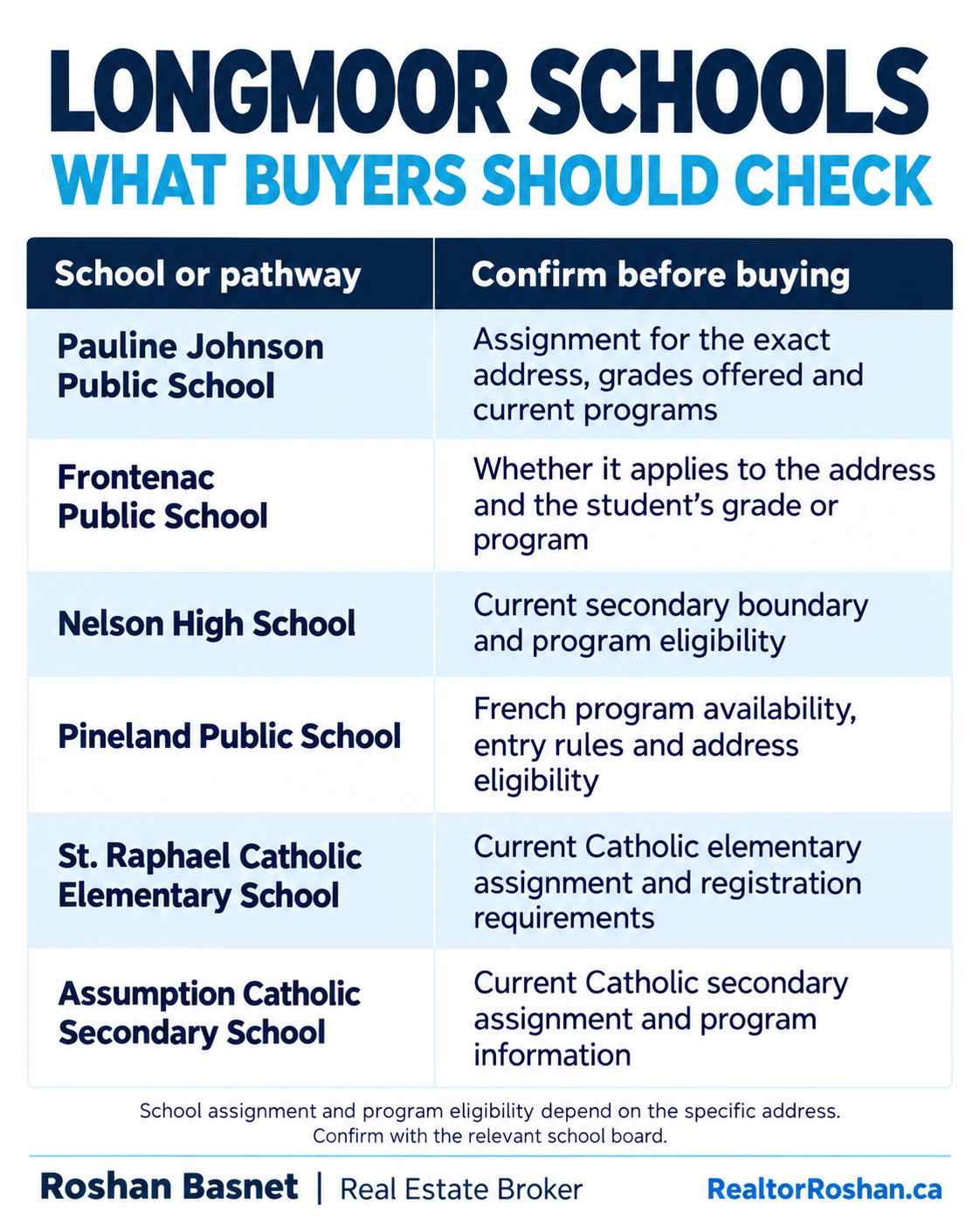
Pauline Johnson Public School is on Longmoor Drive, right within the neighbourhood. Frontenac and Nelson are also names families encounter when investigating public school pathways in this area. Pineland is relevant to families exploring French programming.
For Catholic education, St. Raphael and Assumption are schools to investigate with the Halton Catholic District School Board.
Those names are a starting point. They are not a guarantee that every Longmoor address has the same assignment or that every program follows the same route.
Why I don’t tell buyers to purchase based on one school score
A school ranking attracts attention, but it cannot tell you everything about a student’s experience. It also belongs to a particular reporting year and methodology.
I would rather have a useful conversation about the child, the program, the daily route and what the family needs from the school.
The physical relationship between homes, schools and parks is still a strength worth investigating here. A practical walk to school can affect your morning routine. Access to activities after school can matter just as much.
Before buying, use the relevant board’s current school locator and confirm any important program questions directly. Walk the route too. A short distance on a map can involve a crossing that changes how comfortable you feel about it.
Shopping and daily convenience
Longmoor is primarily residential, with shopping and services around its edges.
In my neighbourhood walkthrough, I describe three useful shopping areas: Fairview and Appleby, New and Appleby, and New and Walker’s.
That arrangement gives you options for groceries, coffee, takeout and ordinary errands without placing commercial activity on every residential street.
Marilu’s Market is one of the nearby shopping landmarks I mention in the video. The broader Fairview corridor adds restaurants, specialty food businesses and services. Individual businesses change, so it is worth exploring what is operating when you visit.
For everyday life, convenience has several parts. How easy is the grocery run after work? Can you combine errands? Is your preferred coffee stop on the way to the station? Can you reach something useful on foot from the particular house?
Those are better questions than simply asking whether a neighbourhood is “walkable.”
Longmoor doesn’t have the same arrangement as living above shops in downtown Burlington. Some errands will still be easier by car. But for a household that wants a residential setting with services nearby, the location can work very well.
The wider South Burlington lifestyle
Longmoor’s location also connects it to amenities beyond its immediate streets.
Lake Ontario and waterfront destinations
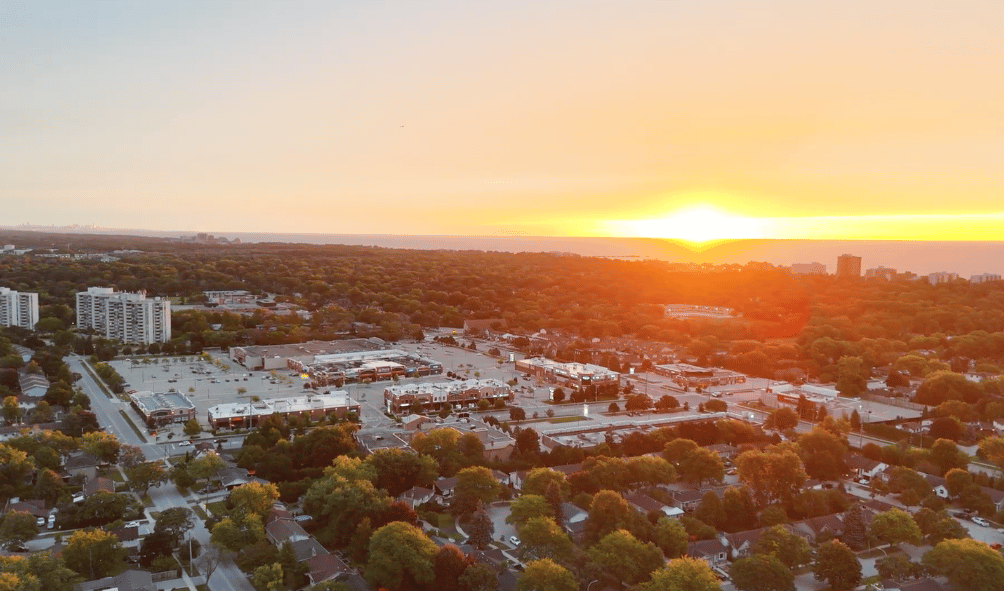
Lake Ontario is south of the neighbourhood, with South Burlington’s waterfront parks and destinations within reach. Paletta Lakefront Park and downtown Burlington are places to consider as part of your wider routine.
Living in Longmoor is different from owning a lakefront property or living downtown. The attraction is having those destinations accessible while your home sits in an established residential setting.
If the waterfront is central to your lifestyle, try the actual journey from a prospective house. You may prefer a property near a southbound route, or you may discover that the distance is perfectly comfortable for the way you get around.
Robert Bateman Community Centre
The former Robert Bateman school property at 5151 New Street has been repurposed into a community facility. The City’s phased-opening announcement describes Brock University’s Burlington campus and the relocated New Appleby library branch among its uses.
It is part of the broader South Burlington amenity picture. Because the project has involved phased work, check current facility information for the spaces and services you want to use.
Skyway Community Centre and Park
Skyway Community Centre and Park is another nearby recreation destination in the wider area. The City describes the new facility as including an NHL-size ice pad and community space.
For a buyer, my point is practical: look beyond the nearest park and understand the network of facilities available around you. Then decide which ones would meaningfully improve your week.
What kinds of homes are in Longmoor?
There is no single “Longmoor house.”
That is one of the most important things to understand when searching Longmoor homes for sale. The housing mix creates options, but it also makes broad price comparisons less useful.
Bungalows and raised ranches
Bungalows can appeal to buyers who want most daily living on one level. Raised ranches often offer a different relationship between the main floor and lower level, and the stairs are part of how the house functions.
Tour the home with your own routine in mind. Where are the bedrooms? Where is the laundry? How does the entrance work? Is the lower level somewhere you would use every day?
A renovated kitchen can make a strong first impression, but the overall layout needs to fit too.
Side-splits and back-splits
Split-level homes divide living spaces across several levels. Some buyers appreciate having separate areas for work, relaxation and family activities. Others find the stairs inconvenient or prefer a more connected main floor.
Neither reaction is wrong. The important thing is to recognize your preference before convincing yourself a layout will work because you like the street.
Traditional and newer two-storeys
Longmoor also has two-storey homes. Some provide the more conventional arrangement buyers expect: principal rooms on the main level and bedrooms upstairs.
Depending on the property, you may find a primary ensuite, larger kitchen or more garage space. Those features are not consistent across every two-storey, so inspect the house rather than assuming them from its style.
Semis and townhouses
Semis and townhouses create additional ways to buy in the neighbourhood, including options below the price of some detached homes.
Check the ownership structure of each property. If it is a condominium, fees, maintenance responsibilities and documents are part of the comparison. If it is freehold, establish what the owner maintains and whether any shared arrangements apply.
The purchase price is one part of the cost and the lifestyle. The responsibilities that come with the property matter as well.
Want a newer layout? Investigate the Delaney pocket
Some buyers tell me, “Roshan, I like Longmoor, but I don’t want to renovate a 1960s split-level.”
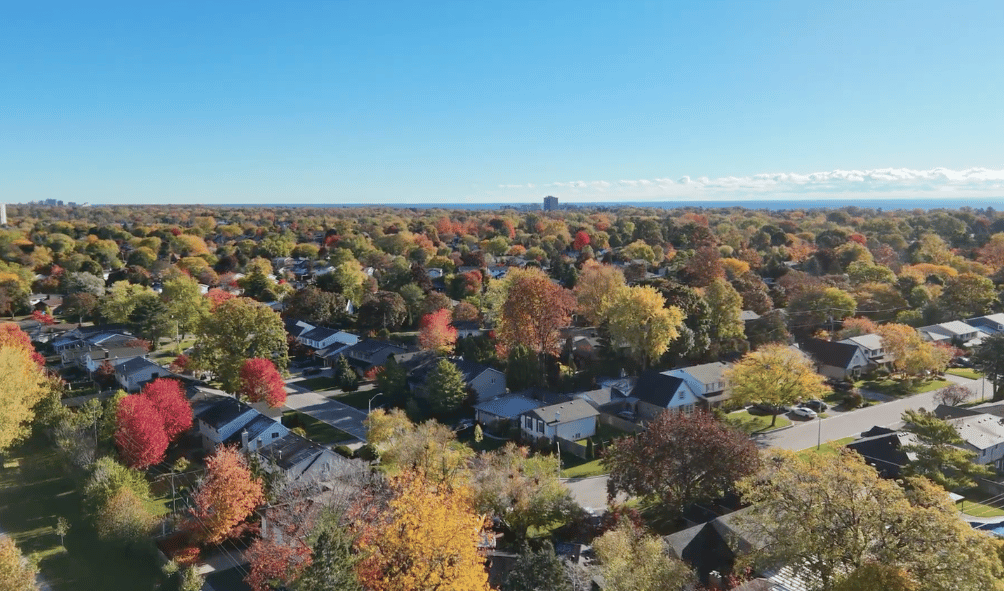
That is when I take a closer look at the Delaney pocket.
The newer two-storey housing there offers a different experience from much of the older stock: larger floorplans, more conventional modern layouts and, in some homes, features such as primary ensuites and double garages.
Some of the homes I discuss in my walkthrough are over 2,000 square feet. The exact size, age and features still need to be confirmed for each listing.
This is why I don’t eliminate a neighbourhood after looking at only one house type. Sometimes the next step is to change the pocket we’re searching.
There will be trade-offs. A newer layout can come with a different price, yard or streetscape. I compare the whole property so the buyer understands what they are gaining and what they are giving up.
Wicklow, Limerick, courts and distinctive locations
I don’t value every Longmoor location in the same way.
Around Wicklow Road and Limerick Road, on individual courts and beside green space, buyers should pay attention to the qualities of the specific property.
A house backing onto another backyard has a different setting from a home beside an open park. Two lots with similar dimensions can feel very different because of trees, neighbouring houses, exposure and the position of the building.
A street name alone is not enough to establish a premium. I want to see the home, compare recent sales and understand the features someone will actually pay for.
The same applies to park backing. It may mean an attractive view and convenient access. It can also mean more activity or less privacy in one part of the yard. The best location is the one whose benefits suit your priorities.
The lots: look carefully at what the land gives you
The land is a major part of Longmoor’s appeal.
In my walkthrough, I use roughly 40–60 feet of width and 100–140 feet of depth as an illustration of dimensions buyers may encounter among detached properties. Those are approximate examples, not a neighbourhood-wide measurement or a substitute for the individual lot’s records.
A mature lot can give you space for a garden, deck, outdoor dining area or pool. Some court lots widen considerably toward the back, creating a yard that is larger than the frontage might suggest.
Lot shape changes usability
A pie-shaped yard can be excellent for one household and awkward for another. Look at where the usable space sits, how the driveway and house occupy the site, and whether trees or existing structures affect your plans.
A long narrow lot and a broad irregular lot can have similar areas while supporting very different outdoor uses. I like to walk the yard with buyers and ask where they would actually put things.
Pools need their own assessment
Longmoor has homes with established pools. For a buyer who wants one, the fact that the yard already accommodates a pool can be appealing.
But an older pool has its own condition and maintenance questions. Look into equipment, liner or surface condition, coping, plumbing and repair history. A pool specialist can help you understand its condition and likely costs.
Someone who won’t use a pool may see the same property differently. That is why I don’t automatically count a pool as a benefit for every buyer.
Space for an addition requires a separate check
A large yard can encourage renovation ideas, but visible space does not establish what can be built. Before assigning value to a future addition, investigate the site’s constraints and obtain appropriate advice about feasibility, approvals and cost.
Buying a property with potential is exciting. Understanding that potential before you commit is what makes the idea useful.
Longmoor home prices: a dated market snapshot
Let’s talk about the numbers, with the dates attached.
The following figures come from the market analysis used in my supplied Longmoor video script. They are a historical neighbourhood snapshot, not current asking prices or a valuation of a particular home.
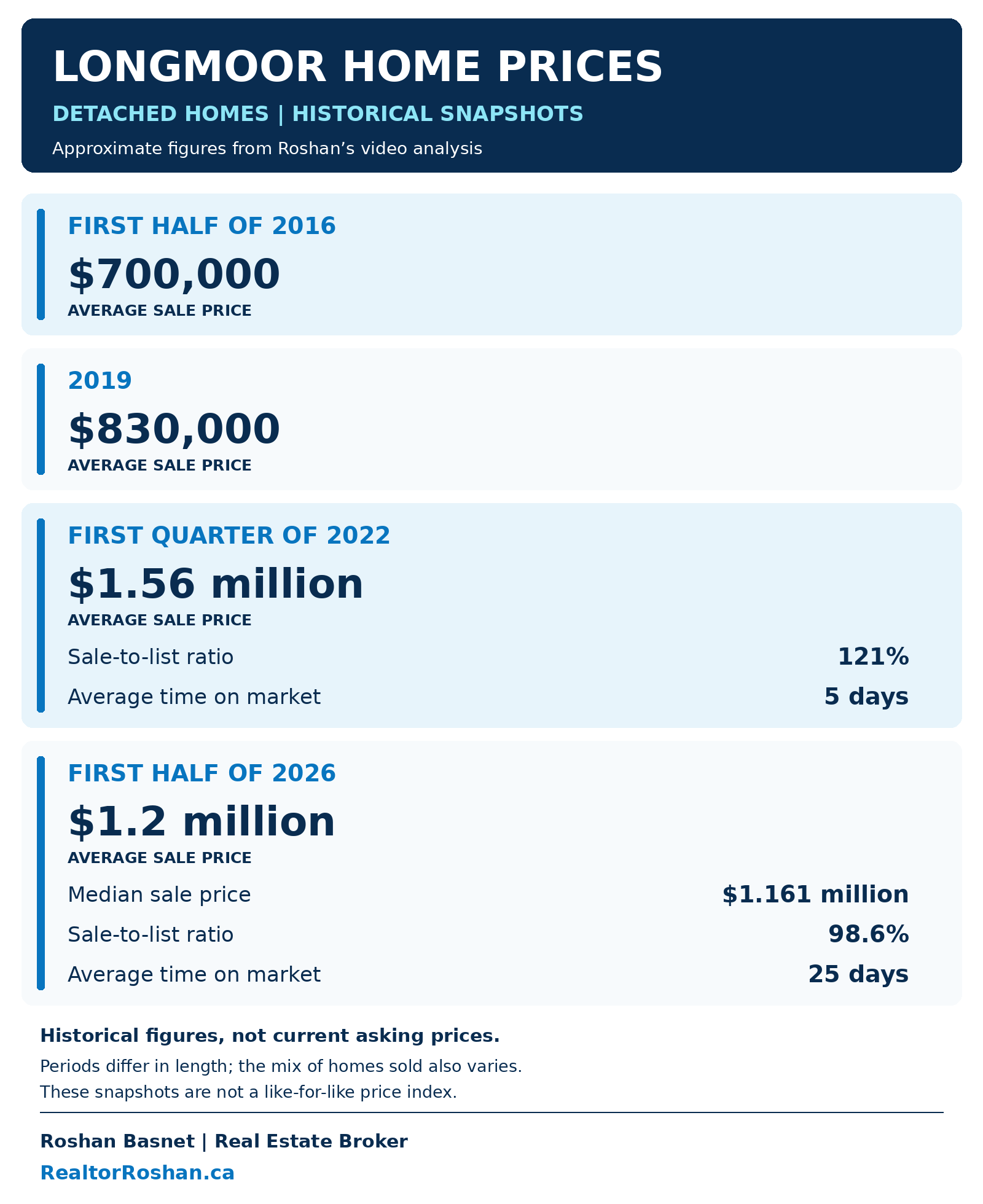
The periods are different lengths, and the mix of homes sold changes. This table shows context, rather than a like-for-like price index.
The 2022 snapshot captures an unusually competitive period. The first-half 2026 figures describe a different market, with more time and a different relationship between asking and selling prices.
Using the rounded figures, the change from $700,000 to $1.2 million is approximately $500,000, or 71%. That is a change in reported average sale prices. It does not mean every property appreciated by that amount or establish a future return.
Can you buy a detached home around $1 million?
My video’s second-quarter 2026 analysis used approximate lower-end reference points of $760,000 for townhomes, $850,000 for semis and $979,000 for detached homes.
Treat those as historical examples of the lower end discussed in that analysis. They are not category averages, a guaranteed minimum or confirmation that a comparable home is available today.
For a current search, I would pull live listings and recent comparable sales. Then I would compare condition, layout, lot, parking and location. A detached house near $1 million can represent a very different purchase from a fully renovated home on an exceptional lot.
What does 98.6% of asking tell you?
A sale-to-list ratio compares a selling price with the listing price used in the calculation. The average helps describe the transactions in the sample, but it doesn’t set the discount a buyer should expect on another home.
A property may be priced realistically, ambitiously or strategically. Price changes also affect how ratios should be interpreted. An offer should be based on the home and comparable evidence, not a neighbourhood-wide percentage applied mechanically.
Why an average is not enough in Longmoor
A dated bungalow, a renovated raised ranch and a newer two-storey are different products. Lot and location differences add another layer.
If you are selling, I want to identify which buyers your home will compete for. If you are buying, I want to understand which recent sales are actually relevant. That is where a street-level comparison becomes more useful than a single average.
Longmoor resale considerations
When I work with buyers, I ask them to think about the next sale as well as the purchase.
You may intend to stay for years, but your circumstances can change. It helps to understand what a future buyer is likely to appreciate—and what might narrow the buyer pool.
Land and setting
A usable yard, attractive mature trees, privacy and a convenient location can support a property’s appeal. Those features deserve careful comparison because they are part of what the next owner will experience too.
Functional layout
Layout is where some older Longmoor homes face a challenge. Buyers may want an ensuite, more kitchen space, convenient laundry or a larger garage. Some properties provide those features; others require compromises or substantial work.
If an upgrade is important, investigate whether it is realistic before treating it as an easy future project.
The people likely to want the home
A bungalow may attract someone seeking main-level living. A larger two-storey may interest an upsizing household. A property with an unusual lot may appeal to a buyer prioritizing outdoor space.
Understanding the likely buyer helps you evaluate both resale and renovation choices. The most expensive improvement is not necessarily the one that broadens appeal most effectively.
Nearby influences and competing homes
Schools, recreation, station access and shopping can be positive influences. Road activity, path traffic and neighbouring land uses also deserve attention.

Buyers may compare Longmoor with Pinedale, Elizabeth Gardens, Palmer, Headon Forest or other Burlington areas. I compare actual properties across those options rather than assume the neighbourhood name settles the question.
My view is that Longmoor has a persuasive combination of land, location and amenities. How well an individual home performs still depends on its condition, presentation, price and the market when it sells.
My own Longmoor renovation: seeing what a house could become
I’m not speaking about renovation potential only in theory.

My family bought an older Longmoor home in 2017. It was a 1960s raised ranch bungalow, on a court, with an unusually large backyard. The existing house wasn’t the finished home we wanted, but the property gave us a reason to look more closely.
We transformed it into a modern farmhouse, opened up the interior and raised part of the ceiling. Above the original one-car garage, we added almost 500 square feet for a primary suite.
The before-and-after images tell the story well: the same property, with a house adapted to the way we wanted to live.
That experience is why I encourage some buyers to look beyond someone else’s finished renovation. An older home can offer possibilities if the location and property are right for you.
It also taught me that renovation involves real trade-offs. Structural changes, ceiling work, additions, finishes and contractor decisions have costs and consequences. A plan needs more than an attractive inspiration photo.
I wouldn’t recommend a major project to every buyer. Some people want a move-in-ready home and should buy accordingly. Others are willing to take on work, provided they understand the budget, disruption and technical requirements.
The useful question is: Does this property give you a credible path to the home you want?
For the full renovation story, watch for my separate Roshan’s House feature, where I go deeper into the decisions, lessons and work behind the transformation.
Creek corridors, drainage and older-home questions
Longmoor’s green corridors add interest to the landscape. Trees, water and open space can create an attractive setting behind a property.

I’ve also filmed local water during major storms. It can look very different from the scene on an ordinary day.
That observation doesn’t tell us the risk at every address. It tells us to ask property-specific questions.
When viewing an older home, I want to understand water history, drainage, grading, the basement and the condition of relevant systems. A finished basement tells you how the room looks. It does not, by itself, explain what has happened there over time.
Useful questions include:
- What does the seller know about past water entry or sewer backup?
- What repairs or preventive work have been done, and is there documentation?
- How does the yard drain, and where do downspouts direct water?
- What does the inspection reveal about the foundation and visible conditions?
- Are there site constraints or insurance questions that need further investigation?
The appropriate follow-up depends on the home. Sometimes it involves an inspector, a specialist, the municipality, Conservation Halton or an insurer.
I cover this in more depth in Before You Buy in Longmoor. This neighbourhood guide gives you the overall picture; that companion article is where we investigate the buying questions more closely.
Commuting from Longmoor: assess the whole journey
Longmoor offers access to both rail and road travel.
Appleby GO serves the Lakeshore West corridor. The QEW is north of the neighbourhood, while Fairview Street, New Street, Appleby Line and Walker’s Line provide local routes.
That gives a commuter options. It does not remove traffic or guarantee a particular travel time.
Using the GO Train
If your work involves Toronto, calculate the trip from your front door to your actual destination. Include getting to the station, parking or connecting transit, the service you intend to take and the journey after leaving the train.
Check current GO schedules and construction notices. I avoid promising a fixed commute based on a train ride alone because the surrounding parts of the journey can change the result.
Driving
Appleby and Fairview can be busy, and QEW conditions vary substantially. Try the route at the time you expect to use it.
A useful home search accounts for your real week: office days, school drop-offs, appointments and evening activities. A location that looks ideal on Sunday afternoon may need a closer look during the weekday rush.
How much can you do without a car?
That depends on the address and your routine. Some homes offer particularly convenient paths to parks, schools or shops. Others require longer walks or less direct connections.
Longmoor can support a lot of outdoor activity, but a completely car-free lifestyle is a separate question. Test the journeys that matter to you before deciding.
Who is Longmoor a good fit for?
I especially like showing Longmoor to buyers who value mature surroundings, outdoor space and a residential setting with amenities nearby.
It can work well for households who want to use the parks and recreation regularly, commuters who value rail and highway options, and buyers who can appreciate an older home’s possibilities.
Some bungalow buyers may also find it appealing, provided the exact layout meets their needs. Main-level bedrooms are only one part of that assessment; entrances, stairs, laundry and parking matter too.
Longmoor may be a more difficult fit if you want exclusively new construction, a very specific modern floorplan or minimal property upkeep. Mature trees and larger yards come with responsibilities. Older homes can require more investigation and future work.
My advice is to make two decisions separately: Does the neighbourhood suit you? Does this particular home suit you?
If both answers are yes, you have a much stronger starting point.
Already own a Longmoor home?
If you’re reading this as a homeowner, the same details that help a buyer choose a property should shape how yours is presented.
What is the strongest reason someone would choose your home? The court? The yard? The renovation? A useful layout? Park access? A newer two-storey within an established neighbourhood?
Those are different selling stories, and they should be supported by what the property actually offers.
Before deciding what to spend on preparation, I would assess the likely buyer, competing listings and the improvements most likely to help. A dated home on a distinctive lot needs a different strategy from a renovated property whose interior is its main attraction.
In Selling Your Longmoor Home, I develop that conversation further—including the question I think sellers should ask an agent: “Sell me my house.”
Listen to how they explain the home’s value. That tells you a lot about whether they understand what they will be marketing.
Frequently asked questions about Longmoor Burlington
Where is Longmoor located?
Longmoor is in South Burlington. A practical orientation is the area generally between Walker’s Line and Appleby Line, with Fairview Street to the north and New Street to the south. Confirm the relevant boundary and address when searching properties.
Is Longmoor a good neighbourhood for families?
Longmoor is worth considering for households that value established residential streets, parks, recreation and nearby schools. The best fit depends on the particular home, school assignment and the routes you will use regularly.
What types of homes are available?
The mix includes bungalows, raised ranches, side-splits, back-splits, two-storeys, semis and townhouses. Some homes retain older layouts; others have been extensively updated. Newer two-storeys in the Delaney pocket provide additional choices.
Are detached homes available around $1 million?
The second-quarter 2026 analysis in my video discussed a detached lower-end reference point around $979,000. That is a historical snapshot. Ask for current listings and comparable sales to understand what your budget can buy today.
Which schools serve Longmoor?
Schools to investigate include Pauline Johnson, Frontenac, Nelson, Pineland, St. Raphael and Assumption. Assignment and program eligibility depend on the exact address, student and current board rules. Confirm directly with the relevant school board.
Is Longmoor close to the GO Train?
Appleby GO is nearby along the Fairview corridor and serves Lakeshore West. The practical journey from a home depends on its location, your mode of travel and current service. Test the route and check GO’s trip planner.
Does Longmoor have larger lots?
Many detached properties offer mature yards, and some court lots widen substantially at the rear. Dimensions and usability vary. Review the specific lot, survey information where available, trees and site constraints.
Can I renovate an older Longmoor home?
Some homes offer meaningful renovation potential, as my own project illustrates. Feasibility depends on the building, site, budget and required approvals. Get appropriate professional advice before relying on a proposed change.
What should I check before buying?
Look closely at layout, condition, water history, drainage, major systems, lot usability, parking and nearby activity. Verify important school and commute requirements. My companion guide, Before You Buy in Longmoor, explores these questions further.
Explore Longmoor with someone who lives here
What I like about Longmoor is how much you can discover once you move beyond a listing photo.
The yard that opens up behind a modest frontage. The court that feels different from the road nearby. The useful connection to the bike path. The newer home in a pocket you hadn’t considered. The older house with a realistic path to something better.
Those are the details I help buyers sort through.
I live here, and I’ve made a Longmoor property my own. If you’re considering a move, I can help you compare the neighbourhood’s pockets and identify the homes that make sense for your needs.
Ask me for current Longmoor homes for sale, or contact me to talk through your move to Burlington.
If you already own here, we can look at your property’s strongest features, its likely competition and the approach I would take to selling it.
Roshan Basnet
Real Estate Broker | REAL Broker Ontario Ltd.
Categories
Recent Posts







Work with me and “Keep What’s Yours! ®” a proven business model that saves home buyers and sellers thousands in real estate commissions.
4145 North Service Rd Unit: Q 2nd Floor L7L 6A3, Burlington, ON, Canada