
Do Open Houses Sell Homes? The Truth Every Seller Should Know
Do Open Houses Sell Homes? The Real Value of an Open House When Selling
Do open houses actually sell homes?
It is one of the most common questions homeowners ask when preparing to sell a property in Oakville, Burlington, or anywhere across the Greater Toronto Area.
Some sellers believe an open house is essential. Others think it only attracts curious neighbours, casual visitors, and people who are nowhere near ready to buy.
The truth sits somewhere in the middle.
An open house does not magically sell a home simply because the front door is open for two hours on a Sunday. But when it is properly marketed, professionally hosted, and supported by strong follow-up, an open house can play an important role in the overall home-selling strategy.
It creates exposure.
It introduces the property to buyers and real estate agents.
It generates useful feedback.
It can reduce the number of inconvenient private showings.
And sometimes, it leads to the second showing that eventually produces an offer.
So rather than asking, “Will an open house sell my home?” sellers should ask a better question:
How will the open house support the overall marketing plan for my property?
Most Home Buyers Start Their Search Online

The modern home-buying journey usually begins on a screen.
Buyers scroll through listings in the evening. They study photographs, review floor plans, check previous sale prices, compare neighbourhoods, look at school boundaries, and calculate commute times.
According to the National Association of REALTORS® 2025 buyer profile:
-
46% of buyers started their home search online.
-
20% contacted a real estate agent first.
-
Only 3% began their search by attending open houses.
At first glance, that 3% figure may make open houses sound unimportant.
But that is not the full story.
The same research found that 48% of buyers used open houses as an information source during their search, while 43% considered open houses very useful.
That tells us something important about modern buyer behaviour.
The open house is usually not where the journey begins. It is where buyers start confirming whether the property they saw online is worth pursuing.
Buyers discover homes online, but they understand homes in person.
Real Estate Is a Tangible Asset
A home cannot be fully understood through listing photographs, video tours, or a virtual walkthrough.
Real estate is tangible. Buyers need to physically experience it.
Photographs can show the kitchen, but they cannot fully communicate how easily people can move through it.
A floor plan can provide room dimensions, but it cannot tell buyers how the space feels.
A virtual tour can show the backyard, but it cannot recreate the sound of the street, the amount of privacy, or how close the neighbouring homes feel.
When buyers walk through a property, they notice details such as:
-
The actual size and flow of the rooms
-
Ceiling height and natural light
-
Hallway width
-
Storage space
-
Sightlines through the home
-
The position of neighbouring properties
-
Street traffic and noise
-
The slope of the driveway
-
Backyard privacy
-
The direction the home faces
Even sunlight can make a meaningful difference.
Does the front of the home receive afternoon sun? Does the backyard sit in shade for most of the day? In winter, does the snow melt quickly on the driveway, or does it remain there long enough to become a private skating rink?
These details are difficult to understand from a listing alone.
An open house gives buyers a low-pressure opportunity to see, feel, and evaluate the property in person.
What Is an Open House?
An open house is a scheduled period during which buyers can tour a property without arranging an individual private showing.
Most public open houses are held on Saturdays or Sundays and last approximately two hours.
The listing agent, or another licensed real estate professional from the brokerage, hosts the event, answers questions, manages access, speaks with visitors, and collects feedback.
However, not every open house serves the same purpose.
There are generally two types:
-
A member or agent open house
-
A public open house
Each serves a different role in marketing a home for sale.
What Is a Member or Agent Open House?

A member open house is organized primarily for real estate professionals.
The goal is to introduce the listing to agents who may have suitable buyers or who regularly work in that price range, neighbourhood, or property type.
This type of open house can be valuable because agents do more than simply view the property.
They may:
-
Send the listing to clients
-
Mention it to buyers who have not yet noticed it online
-
Share the property with colleagues
-
Compare it with competing listings
-
Post permitted photos or video clips on social media
-
Encourage a buyer to arrange a private showing
Sometimes an agent walks through a property and realizes it presents far better in person than it does online.
That agent may immediately think of a client and say:
“You should see this home before making a decision.”
That recommendation carries weight because it comes from someone who has physically toured the property.
When multiple agents attend a member open house, the property is no longer being promoted only through the listing agent’s marketing channels. It is being discussed within a broader agent network.
More agents seeing the home can mean more conversations, more social exposure, and more opportunities to connect the listing with the right buyer.
What Is a Public Open House?
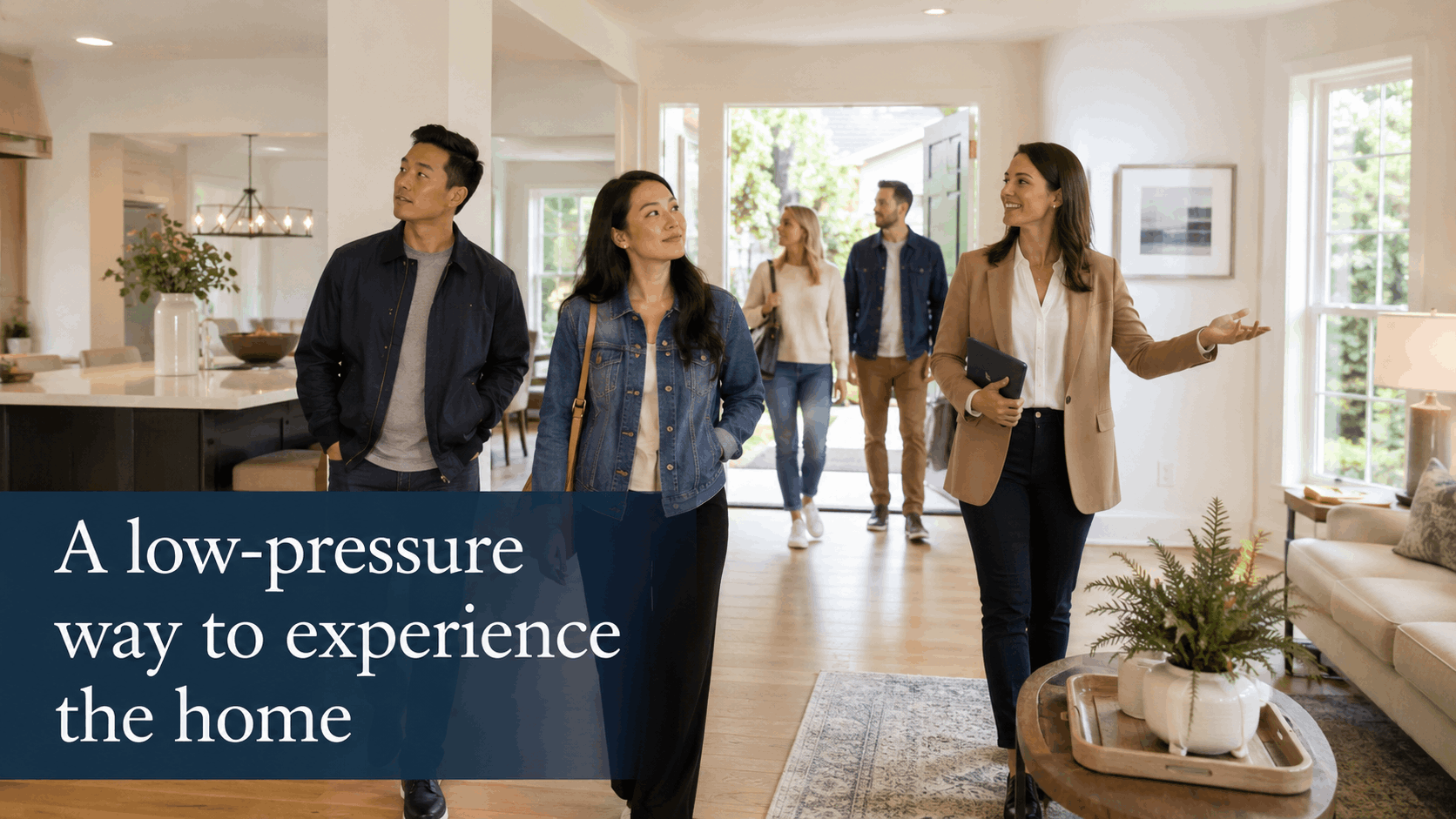
A public open house allows potential buyers to tour the home during a scheduled weekend window without arranging a private appointment.
Visitors may include:
-
Serious buyers who are actively searching
-
Buyers in the early research stage
-
Buyers relocating from another city
-
People comparing Oakville and Burlington
-
Buyers who already have a real estate agent
-
Buyers who have not selected an agent
-
Friends or family members previewing the property
-
Neighbours who know someone looking in the area
-
Curious visitors
Not every person who enters the home will be ready to make an offer.
That does not mean their visit has no value.
Home buyers do not all follow the same path. Some need to see several homes before they understand their priorities. Others are comparing a townhouse with a detached home, or an older South Burlington property with a newer home in North Oakville.
Some buyers visit alone before returning with a spouse, parent, contractor, or real estate agent.
An open house makes that initial visit easier.
Open Houses Are Helpful for Out-of-Town Buyers
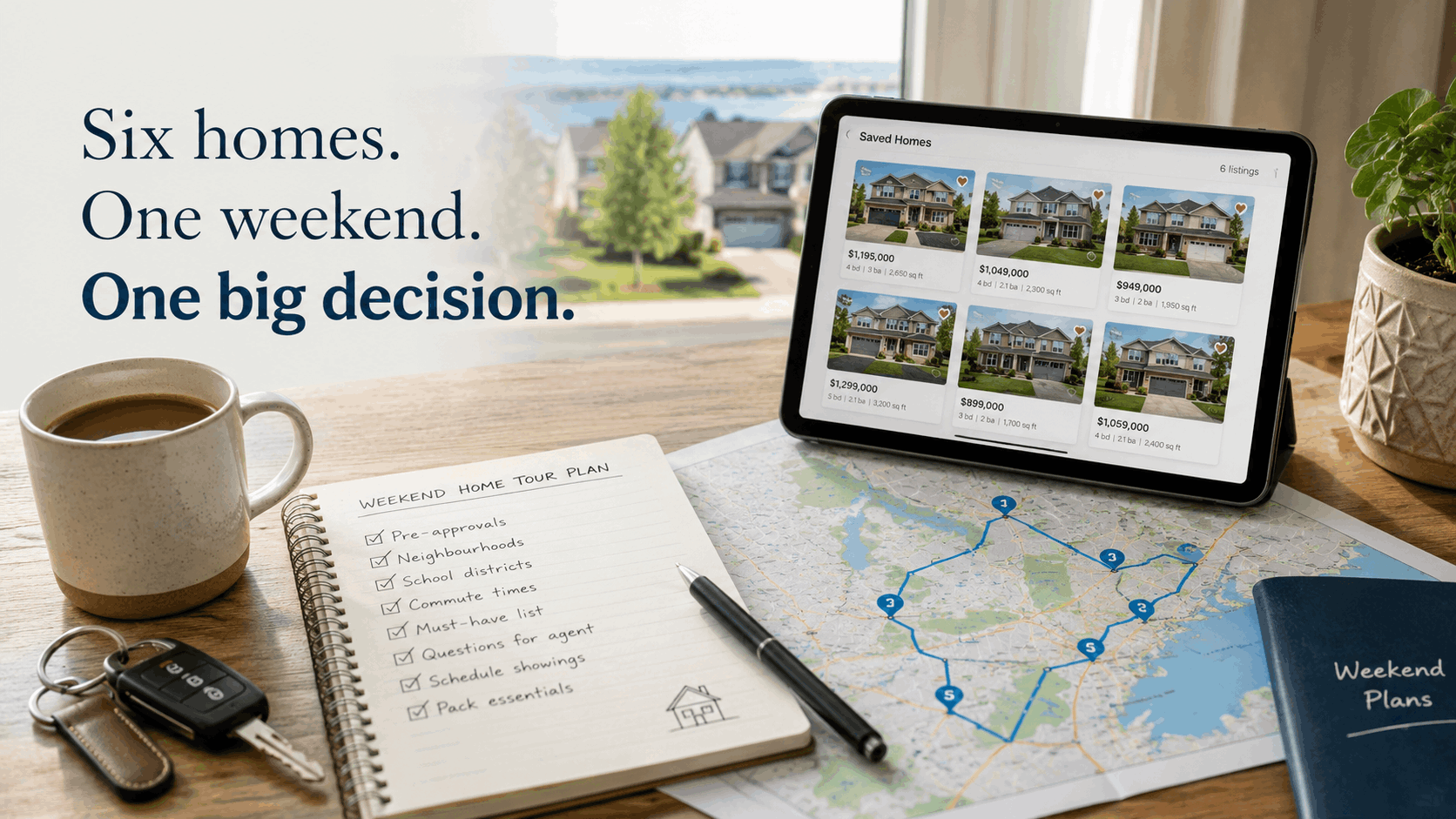
Open houses can be especially valuable for buyers relocating to Oakville or Burlington.
Many relocation buyers begin by searching online from Toronto, Mississauga, Brampton, another province, or even another country.
They save several listings and organize a weekend trip to compare multiple properties and neighbourhoods.
For example, a buyer may be comparing:
-
Bronte with West Oak Trails
-
Glen Abbey with The Orchard
-
South Oakville with South Burlington
-
Millcroft with Joshua Creek
-
A Burlington detached home with an Oakville townhouse
Instead of coordinating six separate showing appointments, they may combine private tours with several weekend open houses.
This gives them a chance to explore the area, examine the streets, understand travel times, and decide which properties deserve a second look.
For relocation buyers, the open house can become part of a larger neighbourhood research trip.
Not Every Serious Buyer Looks Serious
Sellers and agents should be careful not to judge visitors too quickly.
Some buyers are highly expressive. They ask questions, measure rooms, and openly discuss where their furniture might go.
Others say very little.
They quietly walk through the home, thank the agent, and leave.
Then, several days later, their agent books a private showing with a note saying:
“My clients visited during the open house and would like to see it again.”
That second showing may be the one where the buyer takes measurements, studies the mechanical systems, brings a family member, or begins discussing an offer.
The National Association of REALTORS® reports that buyers spent a median of 10 weeks searching for a home.
That means many open house visitors are partway through their search rather than ready to buy that afternoon.
The first visit may create interest. The second visit may create confidence. The offer may come later.
Open Houses Can Reduce Disruption for Sellers
Preparing a home for private showings takes work.
The seller may need to:
-
Clean the property
-
Make the beds
-
Put away personal items
-
Remove pet supplies
-
Turn on lights
-
Leave with children or pets
-
Stay away longer than the scheduled appointment
A 30-minute private showing can easily remove the seller from the home for an hour.
Sometimes the buyer is serious. Sometimes the feedback simply says they are “just starting their search.”
A public open house groups many of these visitors into one scheduled period.
The home is prepared once. The seller leaves once. The hosting agent manages the traffic during the designated window.
This does not eliminate the need for private showings, but it can reduce unnecessary disruption while giving a broader group of buyers access to the home.
Open Houses Must Be Properly Managed
An open house should never mean opening the front door and allowing people to roam through the property unsupervised.
In Ontario, property access must be properly authorized and managed.
The seller should understand:
-
Who will host the open house
-
When it will begin and end
-
How visitors will be registered
-
Which areas can be accessed
-
How the agent will supervise attendees
-
What security precautions will be taken
Before the open house, sellers should remove or secure:
-
Prescription medications
-
Jewellery and valuables
-
Financial documents
-
Passports and identification
-
Mail containing personal information
-
Small electronics
-
Keys and garage remotes
A professional open house balances exposure with responsible property protection.
The goal is to welcome potential buyers—not create chaos in the seller’s home.
The First Open House Can Produce Valuable Feedback
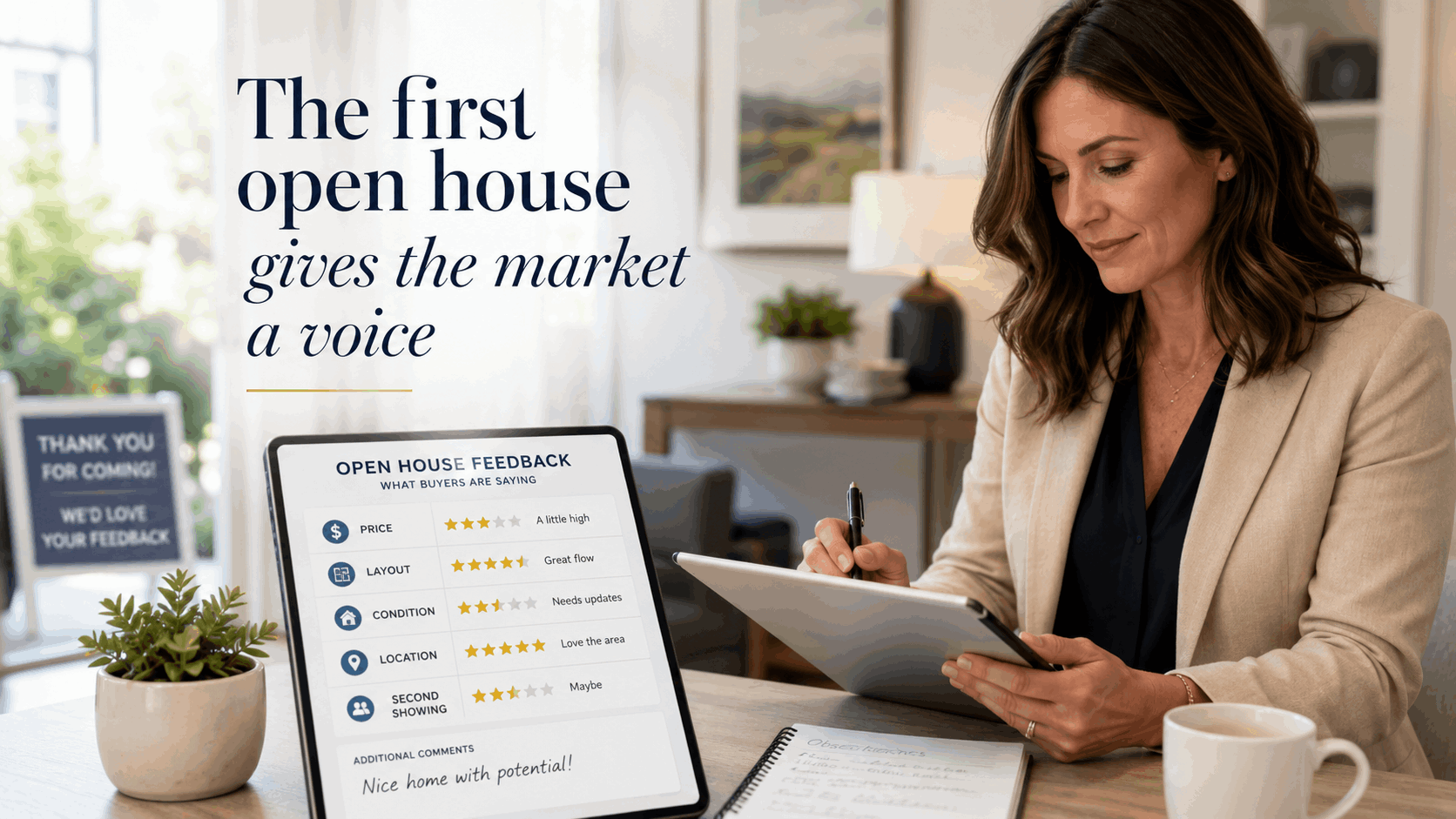
One of the greatest benefits of an open house is the opportunity to gather immediate buyer feedback.
This is particularly important during the first week on the market.
The first wave of visitors may reveal how buyers are reacting to:
-
The asking price
-
The home’s condition
-
The layout
-
Room sizes
-
Renovations
-
Natural light
-
The basement
-
Parking
-
Backyard space
-
Neighbouring properties
-
Competing listings
Buyers may repeatedly ask about the roof, windows, furnace, drainage, school boundaries, or future renovation potential.
They may say the home looks better in person than in the photographs.
Or they may say the photographs created expectations the property did not meet.
That information is useful.
If numerous unrelated visitors raise the same concern, the seller and listing agent should pay attention.
Perhaps a room needs to be restaged.
Maybe the lighting should be improved.
Perhaps the marketing needs to explain the floor plan more clearly.
The listing may need better photographs, a more detailed description, a floor plan, or additional information about the neighbourhood.
In some situations, repeated feedback may indicate that the asking price is not aligned with buyer expectations.
A good listing agent does not simply report the number of people who attended. The agent listens for patterns and turns those patterns into useful advice.
Follow-Up Is What Makes an Open House Productive
An open house does not end when the signs are removed from the street.
The follow-up work matters just as much as the event itself.
The hosting agent should determine:
-
Which visitors were actively searching
-
Which visitors already had an agent
-
Whether anyone wanted a second showing
-
Which competing homes buyers were considering
-
Whether the buyers needed to sell first
-
What they thought about the price
-
What they liked
-
What concerned them
-
Whether they wanted more property information
When a visitor is already working with a real estate agent, the listing representative can ask for that agent’s information and follow up professionally.
The buyer may not contact the listing agent directly, but their representative may arrange another visit.
A well-run open house produces more than a visitor count. It produces conversations, feedback, potential follow-up, and better information for the seller.
Do Listing Agents Benefit From Open Houses?
Yes, real estate agents can also benefit from hosting open houses.
They may meet potential buyers, future sellers, neighbours, and members of the community.
However, that does not automatically mean the open house has no value for the homeowner.
The important question is what the agent does during and after the event.
A productive listing agent should be:
-
Answering questions
-
Explaining the property
-
Identifying serious interest
-
Protecting the seller’s home
-
Gathering feedback
-
Following up with buyer agents
-
Promoting the listing
-
Looking for second-showing opportunities
A motivated agent can be an advantage.
A passive agent who places a sign on the lawn, sits at the kitchen island, and scrolls through a phone for two hours is another story.
The open house needs a purpose, a process, and a follow-up plan.
Can an Open House Lead to Multiple Representation?
An unrepresented buyer may visit an open house and later decide to work with the listing brokerage or agent.
In Ontario, any situation involving multiple representation requires proper disclosure, written acknowledgement, and informed consent.
Sellers should discuss this possibility with their real estate representative before the property is placed on the market.
There may be potential efficiencies when one brokerage is involved with both sides of a transaction, but representation obligations, confidentiality limits, and consent requirements must be clearly understood.
The priority should always be a transparent process and informed decision-making—not simply trying to “double-end” a transaction.
What Should Buyers Look for During an Open House?
Buyers should avoid being distracted only by staging, furniture, and attractive finishes.
A beautifully staged kitchen can create excitement, but buyers still need to evaluate the entire property.
During an open house, consider checking:
-
Overall layout and traffic flow
-
Room dimensions
-
Natural light
-
Storage and closet space
-
Condition of windows and doors
-
Signs of moisture
-
Basement condition
-
Age of the roof and mechanical systems
-
Electrical panel
-
Plumbing
-
Parking and driveway slope
-
Backyard drainage
-
Noise and street activity
-
Neighbouring properties
-
Sun exposure
-
Renovation potential
-
Future resale considerations
After visiting five or six homes in one day, the details can start blending together.
Was the finished basement in the third home or the fifth? Which property had the small bedrooms? Which one had the older furnace? Which backyard faced the afternoon sun?
That is why buyers should use a consistent home tour checklist and take notes immediately after each visit.
Download the Smart Buyer Home Tour Checklist
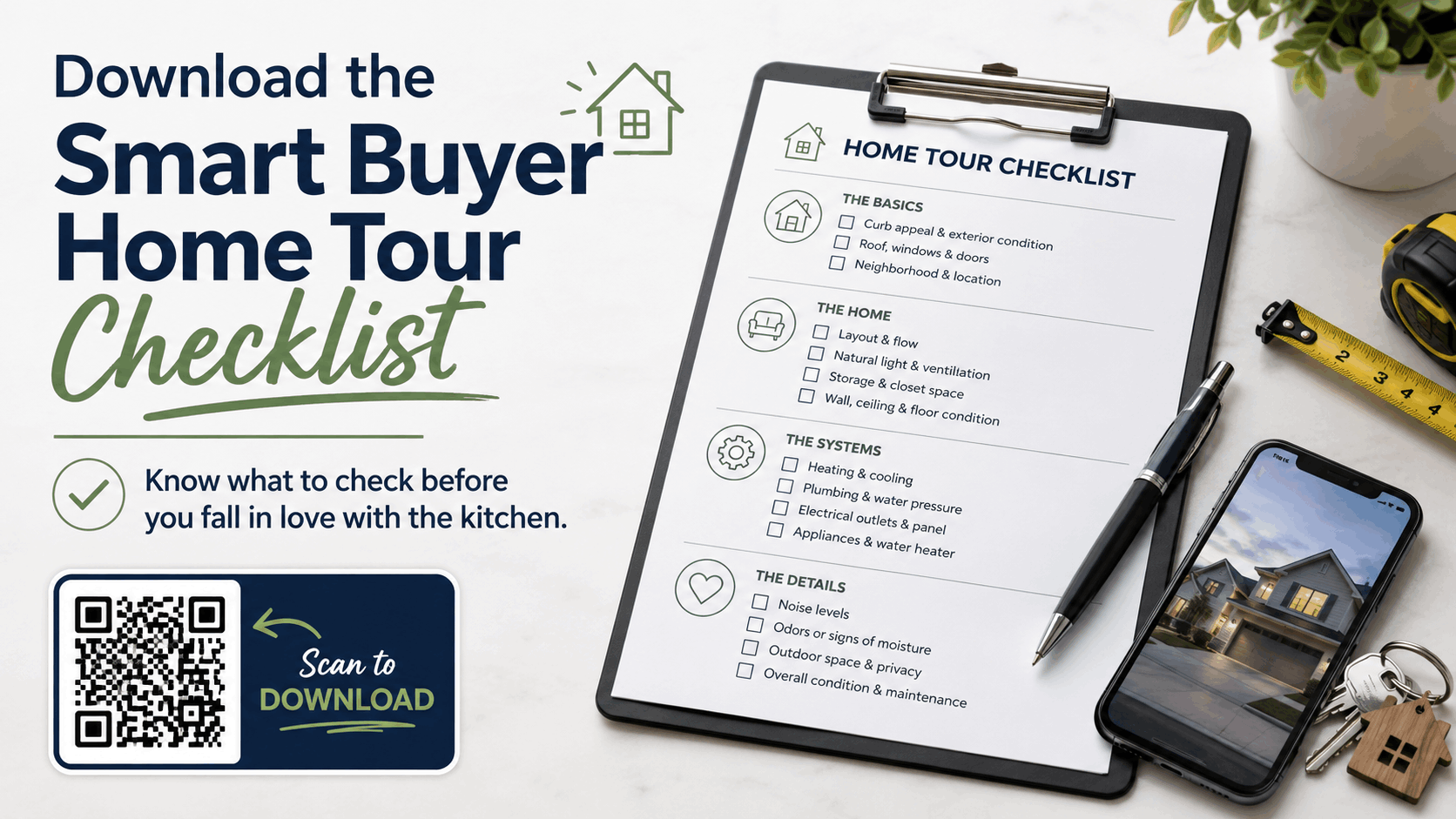
Planning to attend open houses in Oakville, Burlington, or the surrounding GTA?
Download my Smart Buyer Home Tour Checklist before you begin your weekend tour.
It will help you compare properties based on more than staging and photographs. You can evaluate the layout, natural light, major systems, parking, storage, basement, street, lot, and other details that are easy to overlook when emotions take over.
Download the checklist using the link on this page or scan the QR code.
Bring it with you before you make the trip and use it for every property you visit.
So, Do Open Houses Sell Homes?
An open house does not sell a property through magic.
It helps create the conditions that can lead to a successful sale.
A professionally managed open house can:
-
Increase exposure
-
Introduce the listing to agents
-
Help relocation buyers tour efficiently
-
Give buyers a low-pressure first visit
-
Generate neighbourhood word of mouth
-
Reduce unnecessary private-showing disruption
-
Produce useful feedback
-
Lead to second showings
-
Create follow-up opportunities
The buyer may first discover the property online. They may then visit during the open house, return with their agent, complete their due diligence, and eventually submit an offer.
Every step is connected.
Open houses are not magic.
They are momentum.
And in real estate, momentum matters.
Selling a Home in Oakville or Burlington?
If you are preparing to sell a home in Oakville or Burlington, do not simply ask whether your real estate agent plans to hold an open house.
Ask:
-
How will it be promoted?
-
Will there be an agent or member open house?
-
How will public visitors be managed?
-
How will feedback be collected?
-
What follow-up will happen afterward?
-
How does the open house fit into the complete listing strategy?
An open house should never be the entire marketing plan.
It should be one well-executed part of a broader strategy that may include professional photography, video, floor plans, digital advertising, social media marketing, agent networking, direct buyer outreach, private showings, and ongoing market analysis.
I’m Roshan Basnet, Real Estate Broker with Real Broker Ontario.
For professional guidance on buying or selling a home in Oakville or Burlington, contact me to discuss your plans and build the right strategy before you enter the market.
Categories
Recent Posts


Work with me and “Keep What’s Yours! ®” a proven business model that saves home buyers and sellers thousands in real estate commissions.
4145 North Service Rd Unit: Q 2nd Floor L7L 6A3, Burlington, ON, Canada